
It's easy to forget God when life is easy. (Genesis 7-13)

Come Follow Me
Exodus 7-13
7:22-23
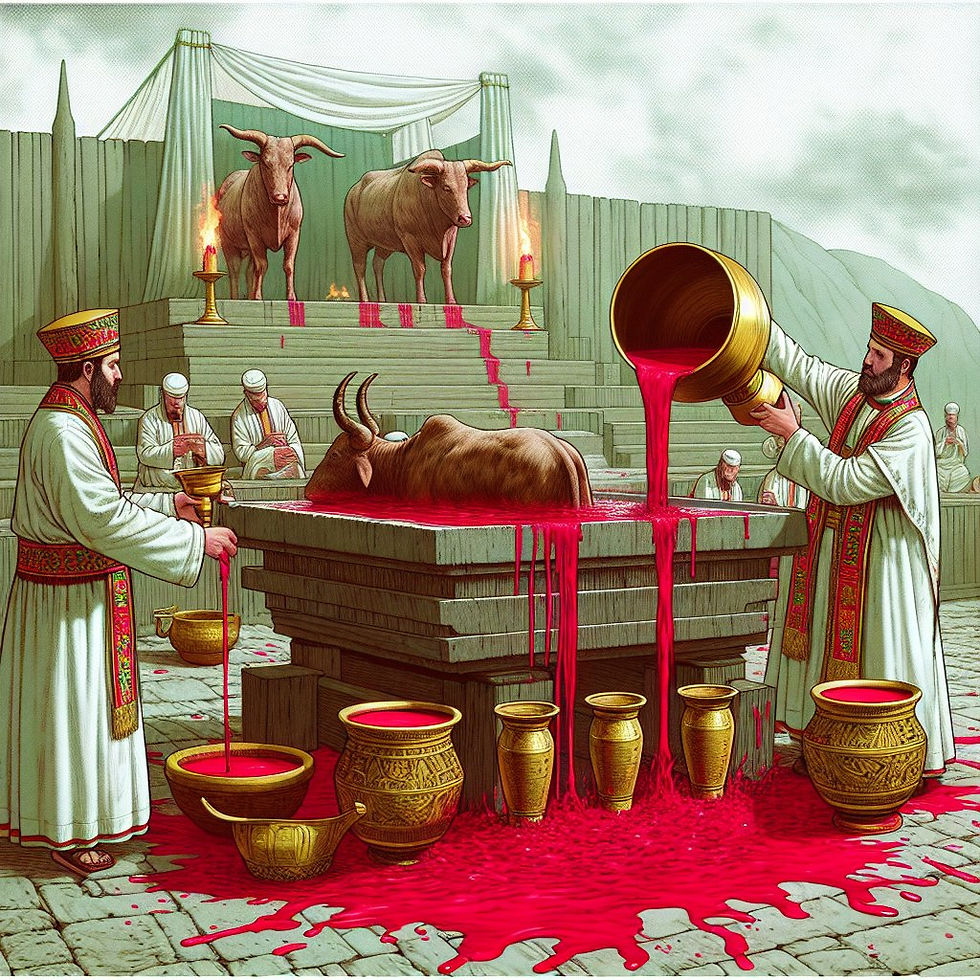
Moses stretched his staff across the waters of Egypt and all water turned to blood. This seems to be a pretty compelling move. If I were a Pharaoh, I would really be impressed with this. I think most humans would be.
However, like most humans, if we can rationalize something away that we don’t want to do or even think about, we’ll jump on the chance. In this case, the Pharaoh’s magicians were able to duplicate this to some degree. “And the magicians of Egypt did so with their enchantments: and Pharaoh’s heart was hardened, neither did he hearken unto them; as the Lord had said.” Here, Pharaoh hardened his heart because of his magicians’ “enchantments.” Again, because his magicians were able to do the same thing, he disregarded the impressive spectacle that was right in front of him!

What’s more, he left. “And Pharaoh turned and went into his house, neither did he set his heart to this also.” He went home and ignored that this even happened. Sometimes, when we know we’re supposed to do something, it’s easier to NOT do it if we aren’t in the vicinity. It’s harder to be inactive when you’re in the midst of an effort - whether that is a service project or a sitting at church. It’s much easier to not think of something that when it isn’t in front of you - truly, out of sight…out of mind.
8:18, 13-15; 9:34
Something different happened when the frogs came - and went. When Pharaoh was in the midst of the problem with the frogs, he begged Moses and Aaron. “Then Pharaoh called for Moses and Aaron, and said, Entreat the Lord, that he may take away the frogs from me, and from my people; and I will let the people go, that they may do sacrifice unto the Lord.” In the middle of the trial, Pharaoh was willing. He shows some dependence and humility on the Lord.
However, when the frogs leave, his attitude changes. “And the Lord did according to the word of Moses; and the frogs died out of the houses, out of the villages, and out of the fields. And they gathered them together upon heaps: and the land stank. But when Pharaoh saw that there was respite, he hardened his heart, and hearkened not unto them; as the Lord had said.” What a loser! I’ve NEVER done anything like this. I’ve never prayed earnestly in the middle of a trial and then kinda forgot about the whole thing when the trial was over. I think this is human nature.

It takes character to follow through with something after the urgency of the problem has passed. It takes character to stay true to what you committed to when you were praying for help. We cannot be earnest in the trial and then flippant when the trial isn’t there. We must REMEMBER what has been done for us and allow the Lord’s blessing to continue to humble and guide us.
Pharaoh does this over and over again. He asks Moses and Aaron to entreat the Lord and then hardened his heart when the problem was resolved. In the next chapter, we read what Pharaoh does after a terrible plague. “And when Pharaoh saw that the rain and the hail and the thunders were ceased, he sinned yet more, and hardened his heart, he and his servants.” I should also mention that his servants also hardened their hearts. It's a good lesson that who you're around will ultimately effect you. Be around people who will be a good influence on you.
Yet, when the locusts came, Pharaoh wants to repent. “Then Pharaoh called for Moses and Aaron in haste; and he said, I have sinned against the Lord your God, and against you. Now therefore forgive, I pray thee, my sin only this once, and entreat the Lord your God, that he may take away from me this death only.” Again, we must be diligent in seeking guidance from our living prophet and listen to the words that he says and follow them to the letter. We do not want to be like Moses and only repent when we’re in the midst of a trial and then forget about the Lord when life is good.
9:21
There was going to be a “grievous hail” in Egypt. Any beast left in a field would die. However, there were some who wouldn’t listen - even though several plagues had already occurred at the word of Moses. “And he that regarded not the word of the Lord left his servants and his cattle in the field.” Why wouldn’t the people listen to what Moses was saying.
How could they be so stupid?! However, who among us isn’t really following what our prophet is saying. A few days ago, my dad talked about how he had followed the prophet’s challenge by looking up Jesus Christ in the Topical Guide and read every verse listed. I hadn’t even remembered that President Nelson had challenged us to do that. It was a good reminder that I need to pay more attention to what our prophet says and then follow what he’s telling us with exactness.

I get the feeling that more warnings are coming. There will be increased frequency to these warnings. The consequences will be even more dire. When President Nelson said that we would not be able to survive the trials that are coming and maintain our testimonies without the companion of the Spirit - we really need to listen. Each of us must do something every day to maintain our connection to the Spirit so we are not tempted or discouraged or convinced to leave the church by the seemingly solid arguments to do so.
13:3
Remembering is one of the greatest principles of living the gospel. As humans, we forget easily. We forget manifestations of the Spirit. We forget lessons that we learn. We forget our place in the universe. We forget the plan of salvation. We forget the big picture. We forget a lot.
Those who leave the church have forgotten something. They’ve forgotten the witness that they received as they read the Book of Mormon. They have forgotten the perspective that they once have. Their mind drifts to some new principle that feels more appealing to them in that moment. It could feel relieving to not have the “pressure” of living the gospel. It could feel like freedom for someone. If we’ve lost our bearings by forgetting who we are and whose we are, reveling in our individuality can feel good. If we don’t remember all of the lessons that we’ve already learned, we can easily get swept off track.

“To help the Israelites remember, the Lord asked them to eat unleavened bread. “And Moses said unto the people, Remember this day, in which ye came out from Egypt, out of the house of bondage; for by strength of hand the Lord brought you out from this place: there shall no leavened bread be eaten.” When they left Egypt, they didn’t have time to let the bread rise so they baked it without leaven. Also, leaven spreads and represents how sin and corruption can spread easily, quickly, and completely. As a result, eating unleavened bread was a good reminder of how the Lord freed them from Egypt and also how they should thoroughly cleanse their life of sin. This element of the yearly passover which is still celebrated today is an excellent example of how the Lord institutes ordinances in our lives to remind us of important principles.
The best example of this today is the weekly sacrament. Partaking of the bread and water in remembrance of Christ’s atonement is a great example of how a physical action can help us remember. The point isn’t the physical action - the point is the actual remembering. If we do things regularly that help remind us of the big picture of the purpose of life, we will be able to stay on course.


Comments